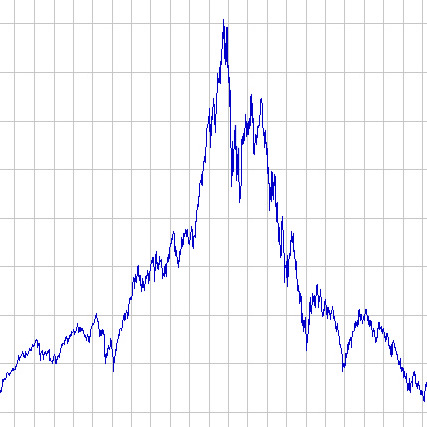
Will there be another stock market crash and economic crisis so soon after the Crash of 2008? Hasn’t the world learned its lesson after the disastrous U.S. and European housing crashes?
Unfortunately, I believe that another devastating crash and economic crisis will happen in the near future simply because the world has learned surprisingly little from its housing bubble experience. After speaking to and reading the thoughts of thousands of people since the 2008 crisis, I have noticed that most people (the same people who didn’t realize that we had a housing bubble in the first place) view the housing crisis as a one-off “freak occurrence” that remains limited to the housing sector and a few related financial institutions.
According to my research, however, I’ve found that our bubble problems didn’t end with the housing bubble. The very same monetary and socio-psychological factors that caused the last decade’s housing bubble have created many other bubbles that have not popped yet.
I’ve identified eight main still-expanding bubbles and have developed an acronym to help people easily remember them: “CCC Aches,” which I will refer to as the “CCC Aches” Bubbles. “CCC Aches” stands for China, Commodities, Canada, Australia, College (U.S.), Healthcare (U.S.), Emerging markets and Social media.
The expansion of the “CCC Aches” bubbles since the darkest days of the Great Recession is largely responsible for creating the illusion of an economic recovery, including job creation and rising stock prices, in a phenomenon that I call a “bubblecovery” or a bubble-driven economic recovery, similar to how the 2003-2007 housing bubble helped to lift the U.S. economy out of its post-Dotcom bubble doldrums.
(Note: I have also identified a Post-2009 Northern & Western European housing bubble in addition to the eight primary “CCC Aches” bubbles.)
I belief that the popping of these bubbles will cause another stock market crash and, quite possibly, an economic depression. (This doesn’t mean that I’m not also concerned with Eurozone crisis–related risks – it’s just that there is already an abundance of coverage of this crisis, so I choose to focus on exposing the extremely important but little-known economic risks that will “come out of left field” and surprise the world.)
Here Are The World’s Latest Economic Bubbles:
China
Though China’s economic growth boom of the past several decades began on a successful premise of economic reforms and modernization, the country’s growth in recent years is increasingly driven by an expanding economic bubble that is similar to the disastrous bubbles experienced by Japan in the late 1980s and the U.S. and Europe during the mid-2000s. China’s bubble economy involves the construction of scores of empty cities, opulent government buildings and infrastructure “megaprojects” to create economic growth as well as a ballooning local government debt bubble and a classic speculative real estate bubble. Even if China were to become the “Next USA” in the long run, it is important to remember that the USA experienced the Great Depression during its ascent as a superpower; China could conceivably experience a Great Depression of its very own when its massive bubble pops.
Read more about the China Bubble
Commodities
Commodities are experiencing a decade-old bubble that is driven by the economic bubbles in China (which requires large amounts of resources to build its empty cities), India and other emerging market nations as well as extremely stimulative monetary conditions created by global central banks in a desperate attempt to spur economic growth after the popping of both the late-1990s Dot-com bubble and the mid-2000s housing bubbles. Hundreds of billions of dollars have been parked in commodities as their prices soared in the past decade, making them the latest “hot” investment destination.
Read more about the Commodities Bubble
Canada
Canada is experiencing a classic bubble economy that is driven by a commodities export boom (which is part of the commodities bubble) a massive housing bubble that is 40% larger than the U.S. housing bubble was at its peak, a consumer debt bubble and global “hot-money” investment inflows. Canada’s bubble economy is driving a U.S. export boom that has helped the U.S. economy recover from the Great Recession – this is just one of the many reasons why the U.S.’ recovery is actually a “bubblecovery.”
Read more about the Canada Bubble & Canadian Housing Bubble
Australia
Australia, similar to Canada, has a bubble economy that is driven by the export of commodities to China, a housing bubble that surpasses the U.S. housing bubble in severity, a household debt bubble and global “hot money” investment inflows.
Read more about the Australia Bubble & Australian Housing Bubble
College
The institution of higher education in America has devolved into a bubble that is an echo of the U.S. housing bubble. Education costs are exploding, funded by a rapidly-expanding $1 trillion student debt bubble as students naively borrow mortgage-like amounts of money only to find themselves working in retail “McJobs” after graduation. Obscene tuition costs are flowing straight into the pockets of fat cats found at all levels of the higher education racket – from $1 million per year earning college presidents to textbook companies to the construction firms that build colleges’ $321 million football stadiums and other opulent vanity projects.
Read more about the U.S. College Bubble
Healthcare
Though everyone is aware of the perpetually soaring cost of healthcare, virtually nobody has put two and two together and realized that healthcare has become the ultimate bubble that will put the housing bubble to shame. Soaring healthcare costs are lining the pockets of healthcare industry profiteers at the same time that they have become the leading cause of personal bankruptcy and are bankrupting America itself. One of the greatest reasons why the U.S. merely experienced a Great Recession instead of a full-blown depression is that the U.S. healthcare industry has become a $2.6 trillion bubble economy-within-an-economy that has continued to relentlessly expand and create large numbers of jobs and economic activity.
Read more about the U.S. Healthcare Bubble
Emerging Markets
China’s economic boom and now bubble has caused commodities prices to soar – along with the fortunes of natural resource-rich emerging market nations. Investors have clamored to invest in emerging markets in recent years and their “hot-money” has inadvertently resulted in overheating economies and property bubbles throughout the entire emerging world. Soaring asset prices and rapid credit growth has created an emerging market luxury goods boom that has bolstered the fortunes of European luxury brands – a main reason why Europe’s economic crisis is not far worse than it is now.
Read more about the Emerging Markets Bubble
Social Media
The business of social media is officially Generation Y’s Dot-com bubble. Though social media technology is clearly here to stay, just like “dot-coms,” the entire sector is dripping with incredible levels of hype as scores of young people attempt to create the “Next Facebook” and nearly every social media IPO has negative earnings or Dot-com bubble-like valuations. By creating nearly 500,000 U.S. jobs in recent years and causing real estate prices to rise again in former housing bubble cities like San Francisco and New York, the social media bubble is a strong contributor to the post-Great Recession “bubblecovery.”
Read more about the Social Media Bubble (aka The Facebook Bubble)
The Post-2009 Northern & Western European Housing Bubble
(though not a part of the primary “CCC Aches” bubbles, it is extremely important, nonetheless.)
Could Sweden or Finland be the scene of the next European financial crisis? It is actually far likelier than most people realize. While the world has been laser-focused on the woes of the heavily-indebted PIIGS nations for the last couple of years, property markets in Northern and Western European countries have been bubbling up to dizzying new heights in a repeat performance of the very property bubbles that caused the global financial crisis in the first place. Nordic and Western European countries such as Norway and Switzerland have attracted strong investment inflows due to their perceived economic safe-haven statuses, serving to further inflate these countries’ preexisting property bubbles that had expanded from the mid-1990s until 2008. With their overheated economies and ballooning property bubbles, today’s safe-haven European countries may very well be tomorrow’s Greeces and Italys.
Read More About The Post-2009 Northern & Western European Housing Bubble
Questions? Comments?
Click on the buttons below to discuss or ask me any question about these bubbles on Twitter or Facebook and I will personally respond:


Comments
Powered by Facebook Comments